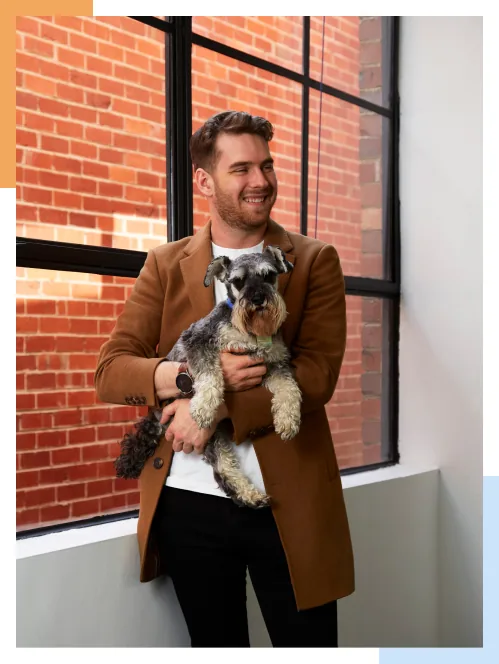
Preston, 2009
I was 17. My mum had lost her house when I was 14, so I'd gone to live with my dad. He was a sailor, away for months at a time, and life with him was unstable from the start. Then he met someone new. She made it clear she didn't want me there. I was the baggage from a previous life. When it came to a head, he chose her.
So at 17, I ended up on the streets of Melbourne for eight months.
I'm not writing that for effect. I'm writing it because it's what happened, and because I think it matters for understanding what comes next. I slept in homeless camps and on couches when I could find them. I used the WiFi at Vinnies to keep working on SEO, because working on something felt like the only thing I could control. My laptop was my most prized possession. I slept with it under my head every night.
I knew other young people who were on the streets during that time. Some of them were newer to it than I was. I didn't know then what I know now about who was behind some of the support they were getting. I found that out much later.
Carly
Eventually I got in touch with St. Vincent's, and they assigned me a social worker named Carly. Mid-thirties, tattoos, stocky, friendly eyes. Fun, in a way I wasn't expecting from someone in that role.
When I first met her, I was not easy to deal with. I walked in with my arms crossed and essentially said: are you going to actually help me, or waste my time like everyone else has? She laughed. Then she asked if I liked R&B.
She was different.
Every Friday, Carly would meet with me. She'd listen, give me advice, help me build plans for what came next. This went on for months. Then one week I called St. Vincent's to move the appointment, and whoever answered told me Carly didn't work Fridays. It was her day off.
She had been coming in on her day off, every week, for months, without ever mentioning it.
With her help, I got my first share house on September 12, just a few days after my 18th birthday. She also helped me enrol in a government business program. I felt like I owed her my best shot at actually making something of it.
Graham
That program is where I met Graham. Seventy-six years old, grey-haired, grumpy in the way that only ex-CEOs with big hearts manage to pull off. He chose to mentor me. In the photo I have of the two of us, he is smiling. It was the one time.
Graham taught me everything about building a business and networking. He helped me get my first client. I grew from there by hiring people who didn't fit the conventional mould, people with unconventional backgrounds or circumstances, people like me. That became the foundation of StudioHawk.
A lot of what I am as a founder, I owe to Graham.
Finding Out About Lighthouse
It was around five years after I'd been on the streets that I found out some of the people I'd known during that time had been supported by Lighthouse Foundation. I hadn't known it then. They focus specifically on youth homelessness, which is a narrower, harder focus than most organisations in the sector. That specificity is part of why I got involved with them.
The more I learned about what they actually do, the more it resonated with what I'd seen matter firsthand. Not just shelter. Not a crisis intervention followed by a handoff. Consistent, ongoing relationships. People who show up and stay.
On June 25, 2021, I sat with my mum in the living room of my rented apartment. She had spent years bouncing between couch-surfing and staying with me. I handed her a cheque for her own home. I watched her face. That was one of the most meaningful moments of my life.
I know what it feels like to be a young person with nowhere to go. I know what one person, one stable moment, one organisation that doesn't give up can do.
"I know what it feels like to be a young person with nowhere to go. I know what one person, one organisation, one stable moment can do."
Why 100%
When I started speaking professionally, the question of what to do with the fees wasn't complicated for me. My minimum fee is $5,000 per event. Every dollar goes to Lighthouse. I don't take a cut. I'm not doing it for the tax position. I'm not publicising it to build a personal brand around generosity.
I talk about it because it's the honest answer to "why do you speak?"
The decision was straightforward. If my time on a stage funds one more bed, one more social worker, one more young person getting a genuine chance, that's not a hard calculation. I'm in a position where a speaking fee improves my life marginally. For Lighthouse, the same amount is the difference between running a program or not, between a young person having support or going without it.
One hundred percent felt right because anything less felt like I was negotiating with myself about something I didn't actually need to negotiate about.
What Lighthouse Actually Does
On any given night in Australia, more than 45,000 young people under 25 are homeless. Most of them aren't visible. They're couch surfing, sleeping in cars, staying in unsafe situations because those feel marginally safer than the street. The scale is confronting and the public conversation about it is nowhere near proportionate to the problem.
Lighthouse Foundation has been working on this for more than 34 years. It started when the founder began taking vulnerable young people into her own home. That origin matters, because the philosophy hasn't really changed. The whole model is built on the idea that what young people experiencing homelessness need most is not just a roof, but a consistent, safe, therapeutic home with people who genuinely give a damn and stay in their lives.
They run several program types. Secure Base homes provide intensive, long-term accommodation for young people aged 12 to 25. The Transitional program supports young people as they move toward independence. The Young Women's Freedom Program is specifically designed for young women escaping unsafe situations. Each operates on the same core principle: relationships built over time, not crisis interventions followed by a handoff.
The program that stands out most to me is On For Life. It's aftercare that continues for as long as a young person needs it, long after they've left formal housing. Most systems have an exit point. Lighthouse's model acknowledges that healing isn't linear and that the relationship is the thing, not the program duration.
The organisation grew services by 39% in FY23/24. The demand is there. The question is always funding and the people willing to do the work.
The People Doing the Work
I want to say something directly about Lighthouse's social workers and clinicians, because it tends to get lost when organisations are discussed at the level of programs and statistics.
These are people who maintain consistent, ongoing relationships with young people who have often been let down by every adult and every institution they've encountered. They show up when it would be easier not to. They build trust across months and years with people who have been given excellent reasons not to trust anyone. They do this while being among the least financially rewarded professionals in the country.
I know what that kind of presence meant for me. Carly came in on her day off, every week, and never said a word about it. When my speaking fees go to Lighthouse, they go to funding people like that, and the environments they create. That feels like the right place for the money.
If This Has Landed With You
You can donate directly to Lighthouse Foundation at lighthousefoundation.org.au. Small, regular contributions matter more than most people think.
You can also book me to speak. Not because it makes me look good, but because a fee from a conference or corporate event becomes a real thing for a real young person. That's the whole transaction as far as I'm concerned.
And if you work in this sector, if you're a social worker or case worker or anyone who shows up consistently for young people with nowhere to go, I want you to know that the people whose lives you've changed remember. Some of them are now running companies and speaking on stages. The work you do matters more than the systems that undervalue it.